Authors

Authors

The names behind the Amicus Certus catalog.

José Ramón Chaves García

Judge and legal scholar

José Ramón Chaves García

José Ramón Chaves García was born in Oviedo in a year he would rather not recall. A judge by profession and a communicator by vocation, he holds a law degree from the University of Oviedo and a doctorate from the University of Salamanca.

Known for his public talks and his newspaper columns, he is a prolific essayist with some thirty books to his name. Among them, for the way they reconcile rigour with humour: No somos muebles de Clickea (2017) ["We are not flat-pack furniture"], Ser funcionario en tiempos difíciles (2019), Elogio de los abogados, escrito por un juez (2022) ["In praise of lawyers, written by a judge"], Los que fuimos escolapios en la EGB (2024), Bailando con lobos disfrazados. Resistir y vencer (2025) and Juristas con servilleta. Gastronomía y humor (2026) ["Jurists with a napkin: food and humour"]. All are in Spanish.

He holds the Encomienda — the Commander's Cross — of the Civil Order of Alfonso X the Wise, and has been named Cajaliano Ilustre and ambassador of the Legacy of Santiago Ramón y Cajal. He is currently president of Globoversia, a national cultural association working for a better world.

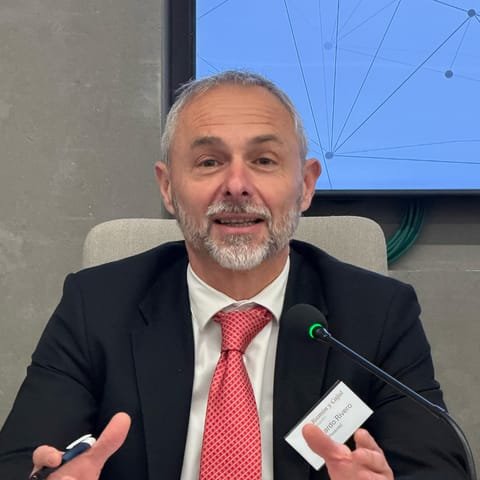
Ricardo Rivero Ortega

Professor and essayist

Ricardo Rivero Ortega

Ricardo Rivero Ortega was born in Palencia in 1969. He is Professor of Administrative Law at the University of Salamanca, where he served as Dean of the Faculty of Law (2012-2017) and as Rector of the University (2017-2024).

Author of more than 250 publications on economic regulation, higher education, local government and institutional innovation, he has been a visiting professor at universities across Europe and the Americas. Among his most recent books: Derecho Administrativo [Administrative Law] (4th ed., 2026), El Derecho al Futuro. Las generaciones venideras y el papel de la Universidad [The Law of the Future: Coming Generations and the Role of the University] (2024, with Raúl Contreras Bustamante), Derecho e Inteligencia Artificial. Cuatro estudios [Law and Artificial Intelligence: Four Studies] (2023) and El Futuro de la Universidad [The Future of the University] (2021). All are in Spanish.

He holds honorary doctorates from universities in Mexico (UNAM), Peru (San Marcos), Argentina (the National University of Córdoba) and Panama, and has received the research prize of the CES of Castilla y León, the COSITAL prize and the medal of the University of Salamanca. He is a corresponding member of the National Academy of Law of Buenos Aires and of Spain's Royal Academy of Legislation and Jurisprudence, and sits on the Public Law section of the General Codification Commission. Since 2025 he has presided over the International Institute of Administrative Law, and has been named Cajaliano Ilustre.

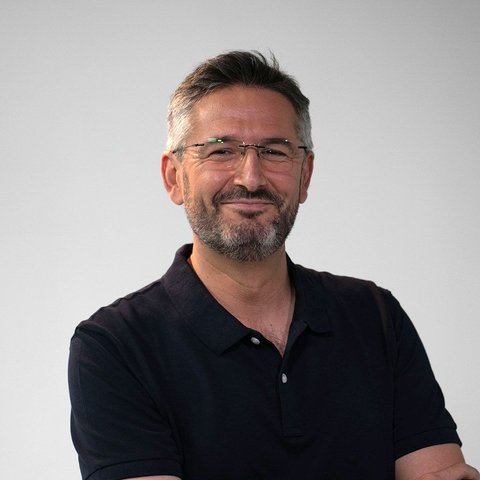
Pedro Uhalte Sevilla

Physician and documentary researcher

Pedro Uhalte Sevilla

Pedro Uhalte Sevilla was born in Petilla de Aragón, the birthplace of Santiago Ramón y Cajal. He is a family physician in Navarre, practising in the Valle de Echauri and Pamplona area.

Since 1991 he has been curator of the Santiago Ramón y Cajal Birthplace House in Petilla de Aragón, which he runs as an active research centre rather than a simple museum stop. He is the author of the monograph Don Justo Ramón Casasús (Evidencia Médica, 2020), on Cajal's father, the result of a systematic review of municipal and university records from the Aragonese towns where he worked; and of a second documentary work devoted to don Santiago Ramón y Cajal himself. Both are published by Amicus Certus.

He regularly speaks at conferences and courses, including the UNED summer courses in Tudela, and has been named Cajaliano Ilustre.

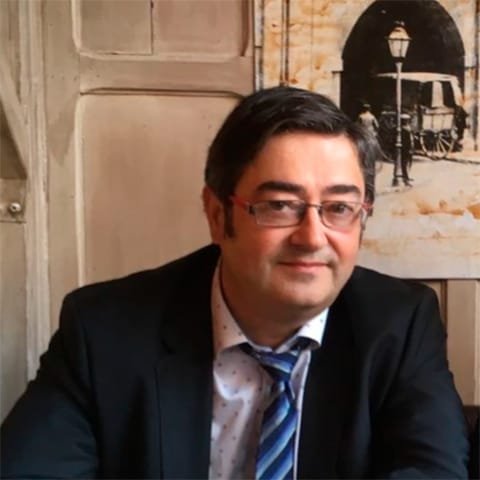
Francisco José Ojuelos Gómez

Lawyer and lecturer in food law

Francisco José Ojuelos Gómez

Francisco José Ojuelos Gómez has been a lawyer since 2002 and practises in Salamanca. He holds a law degree from the University of Huelva and studied European Community law at Université Paris VII–Denis Diderot, the RIEE and the Jean Monnet Chair of the University of Zaragoza.

A specialist in food and nutrition law, he is legal adviser to professional associations of dietitians-nutritionists and an associate lecturer on the degree in Human Nutrition and Dietetics at the Universidad Europea Miguel de Cervantes, where he teaches food legislation and policy, and bioethics and professional ethics. He is a researcher on the SPenT project (Public Health in Transformation) at the University of Lleida and a member of the Law and Health Institute of the Ibero-American Association of Law, Culture and Environment. He also works on noise pollution and on administrative litigation.

He is the author of El derecho de la nutrición (2018) [Nutrition law], Derecho al silencio. Herramientas jurídico-técnicas contra el ruido (2021, with Bartomeu Rosselló i Boeres) [The right to silence: legal and technical tools against noise] and Formación jurídica y extra-sanitaria para el Grado en Nutrición Humana y Dietética (2024) [Legal and non-clinical training for the degree in Human Nutrition and Dietetics], all in Spanish, and has published in Nutrición Hospitalaria, the Revista de Bioética y Derecho and Pediatría de Atención Primaria. El País, ABC, Radio Nacional de España and Cadena SER, among others, have reported his analyses. Amicus Certus will publish his next book, on European food law and nutrients of concern, which grew out of his doctoral thesis at the University of Lleida.

Professor of criminal law and novelist

Francisco Muñoz Conde

Francisco Muñoz Conde (Fuentes de Andalucía, Seville, 1945) is one of the leading criminal law scholars in the Spanish-speaking world. He holds a law degree and a doctorate from the University of Seville and furthered his studies in Munich as an Alexander von Humboldt Foundation fellow. He was professor of criminal law at the University of Cádiz (1980-1985) and the University of Seville (1986-1999), and from 1999 at the Pablo de Olavide University, where he led the research group in Criminal and Criminological Sciences. He has been a visiting professor at Columbia University (New York) and the University of Tsukuba (Japan).

His criminal law textbooks, the Parte especial and the Parte general (the latter with Mercedes García Arán), have trained generations of lawyers in Spain and Latin America; the Parte especial is in its 25th edition. He is also the author of Teoría general del delito, El error en Derecho penal and Edmund Mezger y el Derecho penal de su tiempo, all in Spanish, and has translated Claus Roxin, Winfried Hassemer and George P. Fletcher, among others, into Spanish.

He received the Mutis Humboldt Prize in Legal Sciences (1999) and the Cross of Honour of Saint Raymond of Peñafort, and holds honorary doctorates from universities in Paraguay, Portugal, Brazil, Mexico and Spain, among them Castilla-La Mancha (2011) and Salamanca (2014). Amicus Certus will publish his novel Trinacria.